
From control to energy savings, everything that makes the difference on the modular cabinet.
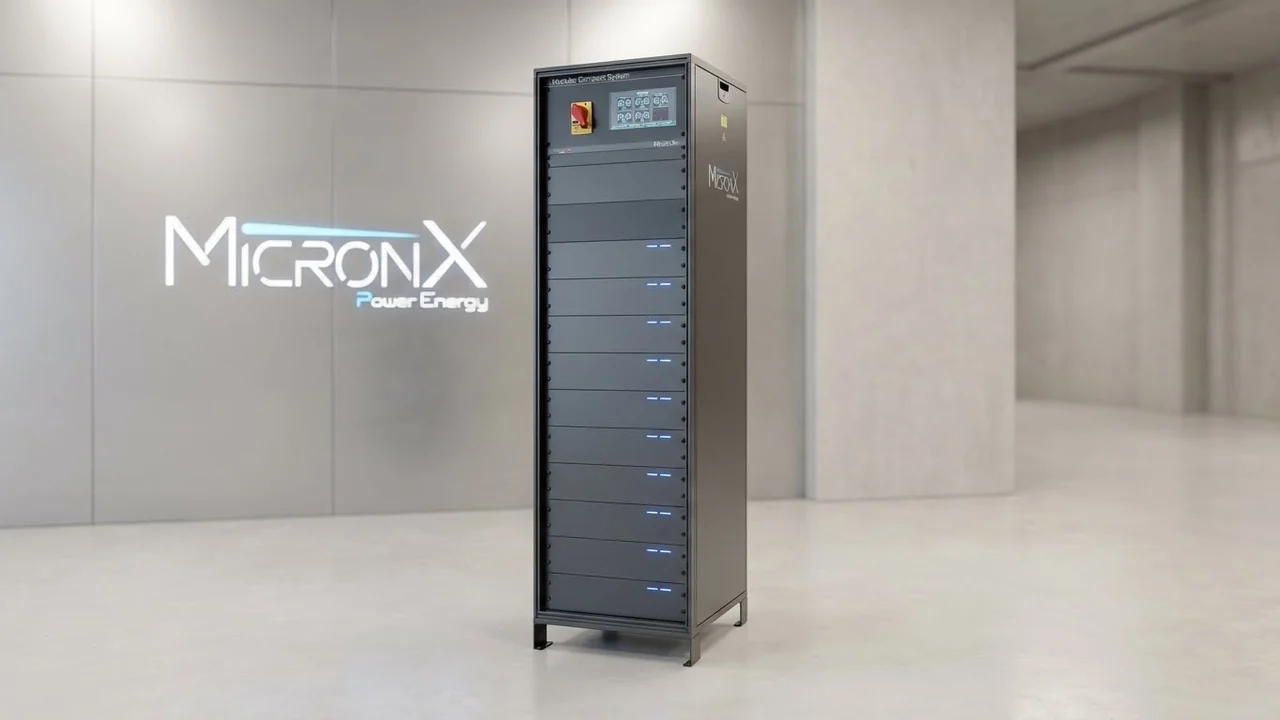
Touchscreen to drive the cabinet: start-up and cycle management, power and current.
Immediate safety, directly accessible on the front panel.
Instant view of the status of each module.
Flexible integration to suit your industrial environment.
Free slots to increase capacity without replacing everything.
Remote takeover and supervision for a reduced MTTR.
Select a size to see its specifications. Each modular cabinet adapts to the number of rectifiers and to the power of your line.
Indicative figures — to be adjusted to your actual configuration.
Indicative figures: each cabinet is configured to your application (process, voltage, current, environment) by our engineering department.
Choose the height that matches the power you need — the cabinet grows with your processes. (Indicative capacities.)
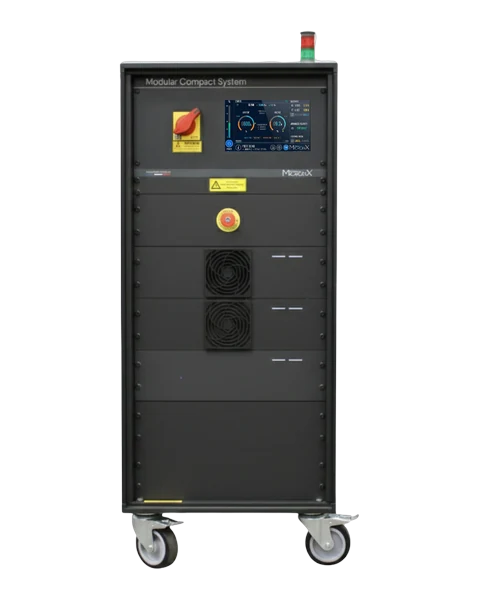
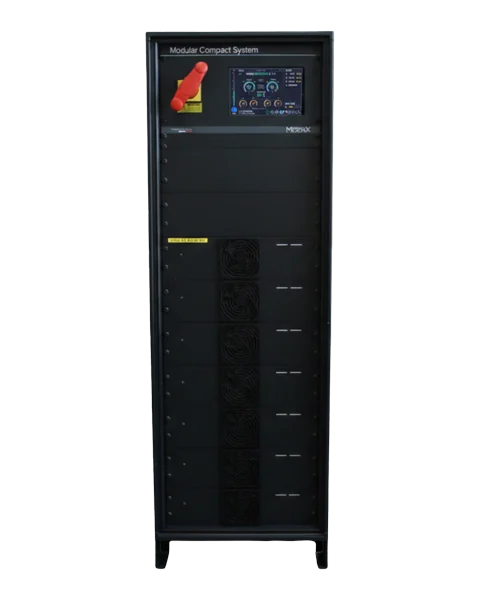
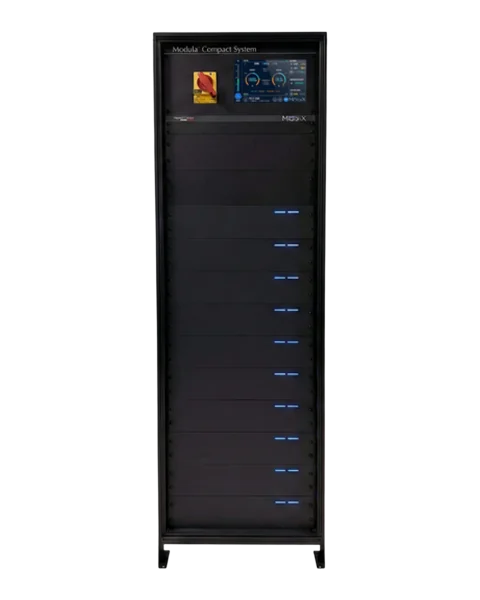
Control, cooling, diagnostics: the modular cabinet in operation.
The modular cabinet powers the most demanding surface finishing processes, where power has to stay stable continuously.
Even, repeatable deposits thanks to perfectly regulated current.
High currents sustained over long periods for thick layers.
Controlled, constant high voltage for aluminium treatment.
Anti-corrosion zinc deposit on steel parts, in a tank or in a barrel.
Nickel deposit for wear resistance, dimensional build-up and finishing.
Immersion coating under current, for even coverage of complex parts.
Gold, silver, palladium, rhodium: thin deposits where every micron counts.
The rectifier powers the bench and follows the test profiles of your equipment.
Worth remembering: the treatment itself takes place on your line, with your baths and your processes. Micronics designs, supplies and maintains the rectifier that powers it — and that is what determines how consistent the deposit is.
Up to 6000 A. The cabinet stacks several power modules to suit your needs; capacity depends on the format chosen (25U, 34U or 43U).
It is a dual-output architecture that lets you power two separate processes, or combine the available power from a single cabinet.
Yes. Free slots allow modules to be added to increase capacity, without replacing the whole installation.
Yes, through the Smart Panel touchscreen and remote diagnostics, which reduces downtime (MTTR).
Both are possible: the cooling method is chosen to suit your industrial environment.
Four steps between your workshop mains supply and your installation.
Your installation is fed by the mains network, in alternating current. A treatment bath, however, needs direct current.
The rectifier turns that alternating current into direct current, the only form your application can use.
You set a voltage or current setpoint. The electronics hold it continuously, despite variations in the load and in the mains supply.
The regulated direct current goes out to your equipment. Continuous measurement compares the result with the setpoint and corrects any deviation immediately.
A rectifier is rarely bought off the shelf: it is selected, configured, installed and maintained.
Process, voltage, current, environment, installation constraints: the right rectifier is chosen from your actual requirement.
Describe my requirement →02Control, metering, interfaces: your rectifier is configured for your installation, then assembled in our workshops in Villette-d'Anthon.
See the options →03Our technicians come on site for the connection, the settings and the handover to your teams.
On-site service →04Servicing, repair, genuine parts: your equipment stays operational year after year.
Repair & maintenance →Configure this product to match your process: control, metering, then specific options. Three families of options, which can be combined to suit your application.
Reverses the direction of the current in the circuit — a real asset when starting up your bath.
Optimal accuracy across two orders of magnitude, to cope with varying currents.
Regulation measured at the load terminals: compensates for the voltage drop in the power cables.
Voltage or current ramp-up, plus a cycle timer for controlled start-ups.
Dual-output rectifier: balanced current sharing from a single setpoint, with simplified wiring.
Our teams design solutions to match your power and environmental constraints.