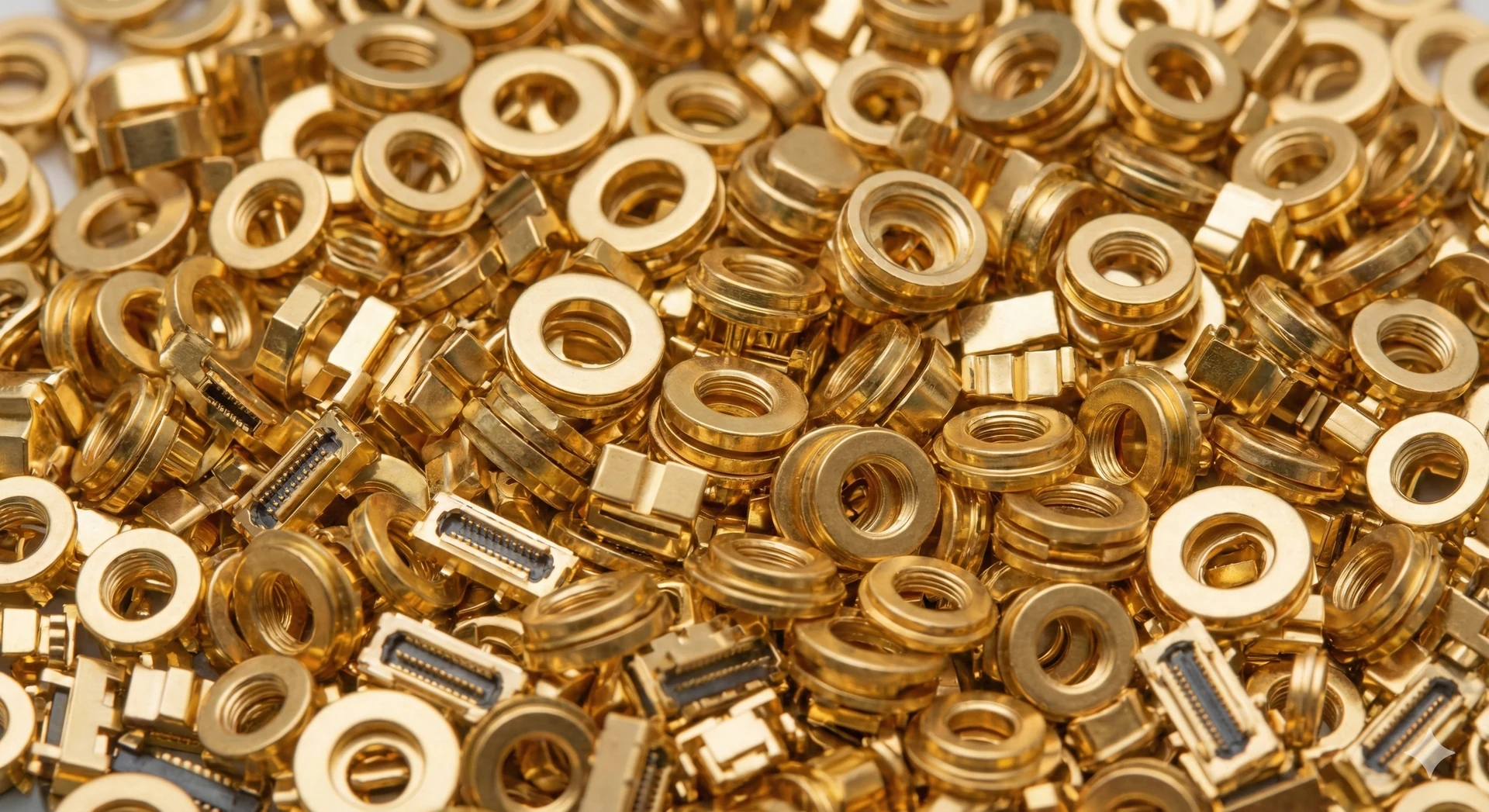
Gold, silver and precious alloy deposits requiring very fine current regulation for even, repeatable and material-efficient results.
Micronics Systems designs rectifiers suited to this process: controlled voltage, reliable current and sustained performance, even on the most demanding lines.
Precious metal plating — gold, silver, palladium, rhodium and noble alloys — is an electrolytic treatment that applies a thin, even layer of precious metal onto a part. The purpose is both cosmetic (appearance, colour, brightness) and functional : electrical conductivity, corrosion resistance, solderability. Thicknesses are usually very small, from a few tenths of a micron to a few microns.
It is used in jewellery and watchmaking, in connectors and electronics (gold-plated contacts), as well as in medical and aerospace applications. Because the deposited material is valuable, every micron counts: you have to deposit exactly the right thickness — too much wastes precious metal, too little means a defect in durability or appearance.
The difficulty of the process lies precisely in that demand for precision: the currents are often low, but they must stay extremely stable and perfectly repeatable. The slightest variation immediately produces uneven thickness — and with a precious metal, that is paid for directly in material and scrap.
Degreasing and activation of the part to ensure the deposit adheres perfectly.
The rectifier applies a low, finely controlled direct current.
The precious metal builds up layer by layer; thickness depends on current and time.
Checking thickness and appearance: how finely the current is set determines both the finish and the material used.
There is no precious metal deposit at all without direct current: the comparison is about the quality of that current, between a supply that fluctuates and a regulated rectifier.
With precious metals, the value of the material changes everything. Deposit too much and you waste gold or silver; deposit too little and the part is non-conforming. Everything therefore rests on the ability to deliver a low, accurate and perfectly stable current, from the start of the cycle to the end.
Micronics rectifiers provide that very fine regulation and that repeatability from one bath to the next. The result: even deposits, thickness controlled to the nearest micron, optimised precious metal consumption — and consistent quality, part after part.
Our experts support you from study through to commissioning.